
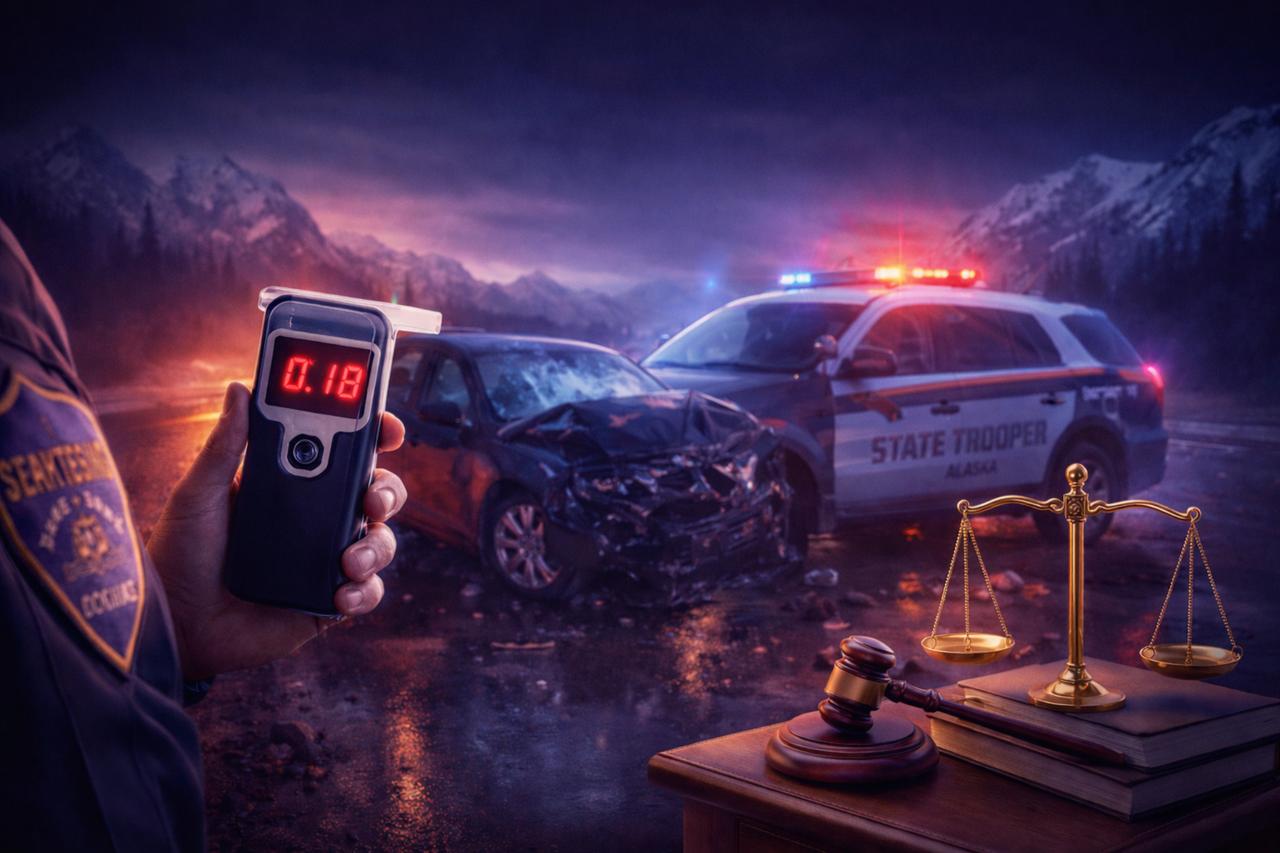

A drunk driving accident lawyer can help turn a chaotic, painful crash into a clear legal plan. When an impaired driver causes a collision, victims are often left dealing with emergency care, follow-up treatment, lost income, vehicle damage, insurance calls, and the emotional fallout that comes from knowing the crash likely should never have happened. In Alaska, that problem is not theoretical. According to the Alaska Highway Safety Office’s FY2023 annual report, alcohol alone was a factor in 32 percent of Alaska traffic fatalities in 2021 and 20 percent in 2022. Nationally, NHTSA reported 12,429 fatalities in alcohol-impaired-driving crashes in 2023. Those numbers help explain why injured people often look for a drunk driving accident lawyer in Alaska as soon as the immediate medical crisis passes.
If you or a loved one were hit by a drunk driver, the legal process usually involves more than filing an insurance claim and hoping for a fair offer. A serious case may require proof of intoxication, crash reconstruction, witness statements, medical documentation, proof of wage loss, and a careful review of all possible defendants and insurance policies. It may also involve a wrongful death claim, a claim against an alcohol provider in a limited set of circumstances, or a civil lawsuit filed while a criminal DUI or OUI case is still pending. This guide explains how these cases work in Alaska, what deadlines matter, what evidence can strengthen your claim, and how BFQ Law Alaska can help injured clients and families from its Anchorage office at 807 G Street, Suite 100, Anchorage, AK 99501.
Table of Contents
- ➜ Why a Drunk Driving Accident Lawyer Matters
- ➜ How Drunk Driving Crashes Affect Alaska Families
- ➜ What Makes These Cases Different From Other Car Accident Claims
- ➜ What to Do After a Drunk Driving Crash in Alaska
- ➜ Alaska Laws and Deadlines That Can Shape Your Claim
- ➜ Evidence That Can Strengthen Your Case
- ➜ Who May Be Liable After a Drunk Driving Accident
- ➜ What Compensation May Be Available
- ➜ Wrongful Death Claims After a Drunk Driving Crash
- ➜ Insurance Issues in Drunk Driving Accident Cases
- ➜ Settlement, Mediation, or Lawsuit
- ➜ How BFQ Law Alaska Can Help
- ➜ When to Call a Drunk Driving Accident Lawyer
- ➜ How to Prepare for Your Consultation
- ➜ Drunk Driving Accident Lawyer FAQs
- ➜ Conclusion
Why a Drunk Driving Accident Lawyer Matters
A drunk driving accident lawyer matters because these crashes often produce stronger liability evidence than an ordinary negligence case, but they also create more moving parts. Many injured people assume a DUI arrest guarantees an easy civil win. In practice, that is not always how the process unfolds. Police may still be investigating. Toxicology may not be complete. The prosecutor may be focused on criminal penalties, not on your medical bills. The insurance company may admit part of the claim but still dispute the extent of your injuries, the value of your pain and suffering, or whether all of your treatment was necessary.
That gap between a criminal investigation and a civil recovery is one reason legal representation matters. A drunk driving accident lawyer in Alaska looks at the entire picture. That includes the impaired driver’s conduct, the scene evidence, vehicle damage, medical proof, wage loss, long-term care needs, and whether another party may also share responsibility. The civil side of the case is about making the victim financially whole as much as the law allows. It is not about jail time. It is not about license suspension. It is about compensation, accountability, and protecting your future.
These cases also move quickly in the early days. Skid marks fade. Video is overwritten. vehicles are repaired or salvaged. Witnesses become harder to find. Bars, restaurants, stores, and rideshare platforms do not preserve records forever. A lawyer can step in early to preserve evidence, communicate with insurers, identify potential claims, and keep you from making avoidable mistakes while you are still recovering.
For Alaska families, that help can be especially important when a crash leads to surgery, air transport, specialty care, rehabilitation, time away from seasonal work, or permanent disability. Alaska’s geography, weather, and travel distances can make serious collision cases harder to document and more expensive to manage. The right legal approach should account for all of that, not just the first emergency room bill.
How Drunk Driving Crashes Affect Alaska Families
Drunk driving crashes can affect every part of a household. The physical injuries may be obvious at first, but the financial and emotional strain often grows over time. A victim may miss work for weeks or months. A spouse may need to take time off to provide care. Parents may have to rearrange transportation, school schedules, and childcare. If the injured person handled seasonal employment, construction work, driving, fishing-related labor, tourism work, or physically demanding outdoor tasks, the loss of earning ability can become one of the largest parts of the case.
That is one reason this topic should not be reduced to a simple “car accident” label. A drunk driving collision often carries a sense of preventable harm that changes how families experience the event. Many victims talk about anger, fear, sleep problems, anxiety on the road, and a loss of confidence long after broken bones begin to heal. Those real human losses can matter in a civil claim, especially when they are documented by medical records, counseling records, and testimony from the injured person and family members.
There is also a public safety context. Alaska’s Highway Safety Office statistics page shows that the state tracks impaired driving data as part of its traffic safety work. The state’s FY2023 annual report described impaired driving as the number one priority for the Alaska Highway Safety Office, noted that the state funds targeted enforcement in high-risk areas, and reported 690 DUI arrests during grant-funded enforcement efforts in FFY2023. In Anchorage, the same report said the Anchorage Police Department’s Impaired Driving Enforcement Unit made 565 misdemeanor OUI arrests and 46 felony OUI arrests in FFY2023, and that 7 of the 24 traffic fatalities in APD’s jurisdiction were OUI related.
Those numbers do not measure every injury claim. They do, however, highlight that impaired driving remains a serious Alaska safety issue. For someone hurt in one of these crashes, a civil case is not just a paperwork exercise. It is often the only path to recover money for medical care, lost earnings, future treatment, home adjustments, pain, emotional distress, and other losses the criminal case does not directly pay.
BFQ Law Alaska’s work in personal injury matters fits into that broader reality. The firm’s Alaska practice also includes family law, civil litigation, wills, trusts, and estates, and mediation and dispute resolution. That broader scope can matter when an injury case overlaps with guardianship issues, estate administration after a death, or settlement decisions that affect the whole family.
What Makes These Cases Different From Other Car Accident Claims
Every crash case turns on proof, damages, and insurance. However, drunk driving accident cases often stand apart in several important ways.
Liability may be clearer, but damages are still contested
If law enforcement documents impairment, the defense may have a harder time disputing fault. Yet insurers often shift their focus to the amount of damages. They may challenge the severity of your injuries, the need for future care, how long you were unable to work, or whether a pre-existing condition explains some of your symptoms.
The civil case may depend on evidence from a criminal investigation
Breath test records, blood test results, field sobriety observations, body camera footage, dash camera footage, blood search warrants, and charging documents can all become important. That means a civil lawyer may need to track a criminal file, request records at the right time, and preserve evidence before it disappears.
There may be more than one liable party
The drunk driver is usually the first focus. Still, some cases also raise questions about employer liability, vehicle ownership, or alcohol-provider liability. Alaska law limits when a person or business that provided alcohol can be held civilly liable, but the issue should still be examined in the right case. The point is simple: a lawyer should not assume the impaired driver is the only source of recovery without first checking the facts.
These crashes may support a stronger damages presentation
Injury victims often want the legal system to recognize the seriousness of the driver’s conduct, not just the medical bills it caused. Alaska’s civil law has separate rules for compensatory damages and punitive damages. In some cases, where the evidence supports the required standard, punitive damages may be part of the discussion. That does not happen automatically, and it is not available in every case, but reckless conduct can affect how the case is evaluated.
The emotional impact is often more intense
Victims of drunk driving crashes frequently describe a deeper sense of violation because the risk was so avoidable. That factor can shape the way a case is documented, especially when the crash caused permanent injury, facial trauma, brain injury, or the death of a family member.
All of that means a drunk driving accident lawyer is not simply handling “another car wreck.” The lawyer is building a case that may involve criminal evidence, multiple insurance layers, complex damages, and urgent evidence-preservation issues from the first week forward.
What to Do After a Drunk Driving Crash in Alaska
The first hours and days after a crash can strongly affect both your health and your legal claim. Here are practical steps that can help.
Get medical care right away
Your health comes first. Follow emergency instructions, go to the ER if needed, and keep every follow-up appointment. Delays in treatment can make injuries worse and can also give insurers an argument that you were not badly hurt.
Call law enforcement and cooperate factually
If you suspect the other driver is impaired, report what you observed. That may include the smell of alcohol, slurred speech, stumbling, open containers, admissions, or erratic driving before impact. Do not exaggerate. Just be accurate.
Document the scene if you can do so safely
Take photos of vehicle positions, damage, skid marks, debris, road conditions, visible injuries, and any alcohol containers or other details in plain view. If witnesses stop, ask for names and contact information.
Preserve your own evidence
Save your clothing, damaged child seats, helmet, phone photos, dash cam footage, towing paperwork, and repair or total-loss documents. Start a folder for every bill, discharge summary, prescription, and work note.
Be careful with insurance statements
You usually need to report the crash to your insurer. Still, that does not mean you should give a detailed recorded statement to the other insurer before you understand your injuries and your rights. A rushed statement can be used against you later.
Watch what you post online
Photos, comments, and check-ins can be taken out of context. Even a smiling photo from a family event may be used to argue you are not in much pain. Set accounts to private and avoid discussing the crash online.
Talk to a lawyer early
The sooner a lawyer becomes involved, the sooner evidence can be preserved. In a drunk driving case, that can include surveillance footage from nearby businesses, 911 calls, body cam footage, blood draw records, bar receipts, and vehicle data.
In addition, Alaska has crash-report rules that may apply if law enforcement did not investigate the collision. Under Alaska legislative materials addressing AS 28.35.080, a driver involved in an accident resulting in bodily injury, death, or apparent property damage of $2,000 or more must generally submit a report within 10 days, unless the crash was investigated by a peace officer. That is one more reason to make sure you understand what reporting steps have already been completed.
Alaska Laws and Deadlines That Can Shape Your Claim
Several Alaska rules can affect the value and timing of a drunk driving accident case. Missing a deadline or misunderstanding one of these rules can weaken a claim or end it entirely.
The two-year filing deadline for many injury claims
Alaska legislative materials addressing AS 09.10.070 and AS 09.10.075 state that actions for certain torts must be brought within two years, and that a person generally may not bring an action for personal injury, death, or property damage unless it is brought within two years of accrual. In plain language, that means many drunk driving injury lawsuits have a two-year deadline.
That does not mean you should wait anywhere close to two years. A lawyer needs time to investigate, collect records, evaluate insurance, and decide whether to file suit. In some situations, related issues such as claims involving minors, governmental entities, or delayed discovery can complicate the timing analysis. Because of that, the safest move is to have the deadline reviewed early.
Crash reporting can matter
As noted above, Alaska’s crash-reporting law may require a written or electronic report within 10 days in certain injury, death, or property-damage cases if law enforcement did not investigate. The Alaska legislative text on AS 28.35.080 outlines that rule. Even when a police investigation exists, you should confirm what records were created and how to obtain them.
Comparative fault can reduce damages, but it does not automatically bar recovery
Alaska follows comparative fault principles. The enacted language in Chapter 139, SLA 1986, which includes AS 09.17.060, says that contributory fault chargeable to the claimant diminishes the compensatory award proportionately but does not bar recovery. That matters in drunk driving crash cases because the defense may still argue that the injured person was speeding, failed to keep a lookout, rode with a known impaired driver, or was partly responsible in some other way.
A strong case therefore does two things at once: it proves the drunk driver’s impairment and also answers predictable defense arguments about comparative fault.
A criminal DUI or OUI case is not the same as your civil case
Criminal prosecutors aim to prove violations of criminal law and seek penalties such as jail, fines, probation, treatment requirements, or license consequences. Your civil claim is different. It focuses on your losses. A criminal conviction may help your civil case, but it does not automatically pay your hospital bills, replace your income, or compensate your family for long-term harm.
That distinction is important because victims sometimes wait for the criminal case to end before speaking to a lawyer. That delay can be costly. Civil evidence should often be pursued while the criminal matter is still moving.
Wrongful death claims have their own framework
When a drunk driving crash causes a death, Alaska’s wrongful death law becomes central. Legislative materials addressing AS 09.55.580 state that when death is caused by the wrongful act or omission of another, the personal representative may maintain an action. That makes early legal help especially important, because estate administration and claim filing often need to be coordinated.
Alcohol-provider liability exists, but Alaska limits it
In some drunk driving cases, victims ask whether a bar, restaurant, store, or other alcohol provider can also be sued. Alaska does allow civil liability in limited situations, but the statute is narrower than many people expect. The legislative text discussing AS 04.21.020 explains that a person who provides alcohol generally may not be held civilly liable for injuries resulting from another person’s intoxication unless specific statutory conditions are met, including circumstances involving licensed providers and unlawful service to someone under 21 or other prohibited service scenarios recognized by law. In short, the issue should be investigated, but it should not be assumed.
These Alaska rules are one reason local legal guidance matters. A drunk driving accident lawyer should understand not just general injury law, but the Alaska-specific deadlines and liability rules that shape how a case should be built from the start.
Evidence That Can Strengthen Your Case
Evidence wins cases. In a drunk driving crash claim, the most valuable evidence often falls into several categories.
Police and criminal-case records
- ➜ Crash report
- ➜ Officer narrative and diagrams
- ➜ Body camera and dash camera footage
- ➜ Field sobriety observations
- ➜ Breath test or blood test records
- ➜ Search warrants for blood draws
- ➜ Charging documents and plea records
These materials can help show impairment, driving conduct, admissions, and the timeline of events. They may also identify witnesses and other investigative leads.
Scene and vehicle evidence
- ➜ Photos of damage and final vehicle positions
- ➜ Skid marks, gouge marks, and debris patterns
- ➜ Airbag control module or event data recorder downloads
- ➜ Vehicle inspection records
- ➜ Towing and salvage documentation
In severe injury cases, preserving the vehicles can matter. Once repairs are made or a totaled vehicle is disposed of, some physical evidence may be lost.
Witness and video evidence
Independent witnesses can be powerful, especially if they saw the impaired driver before the impact. Nearby gas stations, traffic cameras, businesses, bars, restaurants, and residences may also have video, but that footage may be deleted quickly unless it is requested early.
Medical proof
Your medical file often becomes the backbone of the damages case. That includes ambulance records, ER records, imaging, specialist evaluations, surgery records, physical therapy notes, prescriptions, prognosis opinions, and any treatment for anxiety, sleep problems, or post-traumatic stress symptoms after the crash.
Income and employment proof
Lost wages and reduced earning capacity require documents. Helpful proof may include pay stubs, tax returns, employer letters, missed-contract records, job descriptions, and evidence showing why your injuries affect your ability to do the same work going forward.
Proof of daily-life impact
Not every important loss appears on a bill. Pain, sleep disruption, loss of independence, activity limits, missed family events, driving anxiety, and inability to return to hobbies or physical work can all matter. A journal, photos, therapist notes, and testimony from family members may help explain those losses in a way that numbers alone cannot.
A drunk driving accident lawyer in Alaska should gather evidence in an organized way from the beginning. That helps when settlement talks start, and it also helps if the case needs to be filed in court.
Who May Be Liable After a Drunk Driving Accident
Most people start with the same question: isn’t the drunk driver the only person responsible? Often the drunk driver is the main defendant, but not always the only one worth investigating.
The impaired driver
This is the most obvious claim. If the driver’s intoxication and negligent driving caused the collision, the driver can be liable for the victim’s losses.
The owner of the vehicle
In some cases, the owner of the vehicle may also matter. Ownership alone does not automatically create liability in every situation, but facts such as permission, entrustment, and insurance coverage should be examined.
An employer
If the impaired driver was working at the time of the crash, making deliveries, driving a company vehicle, or acting within the scope of employment, an employer may become part of the case. This depends heavily on the facts.
An alcohol provider in limited situations
As discussed above, Alaska law places limits on civil liability for providing alcohol. However, the statute should still be reviewed carefully in the right case, especially where there is evidence of unlawful service to a minor or service prohibited by statute. An early investigation can reveal whether receipts, surveillance footage, witness testimony, or point-of-sale data exist to support that theory.
Other negligent drivers or entities
Some cases involve more than one bad act. For example, a drunk driver may strike a victim after another driver created a hazard. Or a road-design issue may contribute to the severity of the collision. Even if the intoxicated driver remains the central wrongdoer, a lawyer should still examine every potentially liable party and every available insurance policy.
This is where a broad injury and litigation approach can help. Through its Alaska practice areas, BFQ Law Alaska addresses disputes through negotiation, mediation, arbitration, and litigation when needed. That range can be useful when a case involves more than one defendant, more than one insurer, or settlement positions that are far apart.
What Compensation May Be Available
The goal of a civil claim is to recover money for losses caused by the crash. The exact categories depend on the facts, but many drunk driving accident cases involve some combination of the following.
Medical expenses
This may include ambulance transport, emergency care, hospitalization, surgery, imaging, specialist visits, physical therapy, occupational therapy, medications, counseling, medical devices, future procedures, and long-term care planning.
Lost wages
If you missed work because of treatment, hospitalization, or physical limits, those lost earnings may be recoverable.
Reduced earning capacity
Some injuries permanently affect the type or amount of work a person can do. A tradesperson may not be able to lift. A commercial driver may not be medically cleared to drive. A person with cognitive symptoms may not be able to return to complex or safety-sensitive work. Those future losses can be substantial.
Property damage and related out-of-pocket losses
This can include vehicle damage, towing, storage, rental costs, transportation expenses, and other out-of-pocket costs tied to the crash.
Pain and suffering
Physical pain, discomfort, and the lasting bodily effects of injury are often a major part of the claim, especially when the injuries are severe.
Emotional distress and loss of enjoyment of life
Sleep disruption, anxiety, fear of driving, depression, post-traumatic stress symptoms, and the inability to participate in normal life can all matter. Alaska’s civil statutes addressing noneconomic damages discuss categories such as pain, suffering, inconvenience, physical impairment, disfigurement, and loss of enjoyment of life. Even when special statutory rules may apply to how some damages are handled, those losses should still be documented carefully.
Disfigurement and permanent impairment
Scars, orthopedic limitations, chronic pain, nerve damage, vision issues, cognitive deficits, and mobility restrictions often increase the seriousness and value of a case.
Punitive damages in the right case
In some drunk driving cases, the facts may justify a claim for punitive damages. Alaska legislative materials discussing AS 09.17.020 state that punitive damages require clear and convincing evidence of outrageous conduct, including acts done with malice, bad motives, or reckless indifference to another person’s interests. A lawyer should evaluate this issue carefully based on the facts, the available evidence, and current Alaska law.
The key point is that your case is not just a stack of bills. A serious drunk driving crash can affect your body, income, family life, mental health, and future independence. A good damages presentation should reflect the full picture.
Wrongful Death Claims After a Drunk Driving Crash
When a drunk driver causes a fatal collision, the legal and emotional stakes rise even further. Families are suddenly dealing with grief, funeral planning, estate issues, medical bills, insurance questions, and often the shock of a criminal case developing at the same time.
Under Alaska legislative materials addressing AS 09.55.580, a wrongful death action is generally brought by the personal representative when a person’s death is caused by the wrongful act or omission of another. That means the civil process may require coordination between probate or estate administration and the injury claim itself.
Wrongful death damages can vary depending on the facts and the applicable Alaska rules. In practical terms, families may need to document final medical expenses, funeral costs, loss of financial support, loss of household services, and the broader impact of the death on the surviving family. If the person who died was a parent, spouse, or major wage earner, the economic analysis may become more detailed. If the death followed a period of survival after the crash, there may also be separate damages connected to that period of pain and medical care.
These cases demand sensitive handling and strong organization. Families should not have to figure out on their own how to collect records, preserve evidence, open an estate, deal with insurers, and track a criminal file while grieving. That is one reason many families speak with a drunk driving accident lawyer soon after a fatal crash, even if they are not yet ready to make major decisions. Early guidance can prevent costly mistakes and help the family understand what comes next.
BFQ Law Alaska’s wider Alaska practice can be relevant here as well. If a case intersects with estate administration or trust and probate questions, the firm’s wills, trusts, and estates work may be part of the conversation alongside the personal injury claim.
Insurance Issues in Drunk Driving Accident Cases
Insurance is often where the civil fight actually happens. Even when fault looks obvious, insurers still look for ways to limit what they pay.
The other driver’s liability coverage
This is usually the first layer of recovery. However, policy limits may not be enough in a severe injury case. A drunk driving crash can easily produce damages that exceed a minimum or modest policy.
Your own uninsured or underinsured motorist coverage
If the drunk driver has no insurance or not enough insurance, your own policy’s UM or UIM coverage may become critical. Many injured people do not realize how important this coverage is until after a major crash.
Medical payments or other first-party benefits
Depending on your policy, some first-party benefits may help with immediate expenses while the liability claim is still pending.
Recorded statements and quick settlement pressure
Insurers sometimes move fast after a drunk driving crash, especially when they know fault looks bad for their driver. That speed is not always for your benefit. An early offer may come before you know whether you will need surgery, how long you will be off work, or whether symptoms will become chronic.
Health insurance, liens, and reimbursement issues
Even when health insurance covers treatment, repayment or reimbursement issues may arise later from the settlement. That means the amount you “recover” on paper is not always the amount you actually keep unless those issues are handled carefully.
Bad-faith questions in the right case
When insurers fail to evaluate a claim fairly, delay without justification, or mishandle obvious liability cases, additional legal questions can arise. Not every hard-fought claim becomes a bad-faith case, but insurer conduct still matters.
A drunk driving accident lawyer should review every policy and every coverage source early. That includes the at-fault driver’s policy, umbrella coverage, employer-related policies if applicable, and your own UM or UIM benefits. Serious cases are too important to assume one policy is the whole story.
Settlement, Mediation, or Lawsuit
Not every drunk driving accident claim goes to trial. In fact, many are resolved through settlement. But a fair settlement usually comes only after the case is fully prepared.
Early settlement may make sense in a limited set of cases
If liability is clear, injuries are fully understood, and policy limits are available, an early resolution may be practical. That is more likely in cases with modest injuries and straightforward coverage.
Many serious cases need a fuller build-out first
Before meaningful settlement talks, a lawyer may need to gather medical records, wage information, future-care opinions, crash evidence, and criminal-case records. That takes time, but it usually produces a stronger demand package.
Mediation can be useful
Some cases benefit from structured settlement negotiations with a neutral mediator. BFQ Law Alaska’s Alaska site explains that the firm uses mediation and other dispute-resolution tools as part of its work. In the right case, mediation can help parties reach resolution without a trial, while still giving the victim a serious opportunity to present the full damages story.
Sometimes filing suit is the only realistic path
If the insurer disputes damages, denies fair value, blames the victim, or refuses to resolve the case responsibly, filing a lawsuit may be necessary. Litigation can unlock formal discovery tools such as subpoenas, depositions, expert disclosure, and court supervision of evidence issues.
The important point is this: settlement is not the opposite of preparation. Strong preparation often produces better settlement results. A drunk driving accident lawyer should be ready to negotiate, mediate, and litigate based on what your case requires, not just what is easiest for the insurer.
How BFQ Law Alaska Can Help
BFQ Law Alaska represents clients from Anchorage and across the state and offers Alaska legal services through its Anchorage office contact page. For someone injured by a drunk driver, the firm can help by evaluating liability, preserving evidence, managing insurer communications, documenting damages, and preparing the claim for settlement discussions or litigation.
That work may include:
- ➜ Reviewing the crash facts and identifying immediate evidence-preservation needs
- ➜ Obtaining police, medical, and insurance records
- ➜ Tracking related DUI or OUI criminal proceedings for useful civil evidence
- ➜ Calculating lost wages and reduced earning ability
- ➜ Evaluating whether alcohol-provider liability or other additional claims should be investigated
- ➜ Preparing a detailed settlement demand
- ➜ Negotiating with insurers from a position supported by records and law
- ➜ Filing suit when a fair result is not offered voluntarily
BFQ Law Alaska also brings a broader Alaska practice that can help when a case touches more than one area of law. The firm’s site highlights work in personal injury, family law, civil litigation, wills, trusts, and estates, and settlement and dispute resolution. That wider experience can matter when an injury claim involves estate issues, family stress, probate steps after a death, or litigation strategy that extends beyond a simple insurance negotiation.
If you want to speak with BFQ Law Alaska, you can use the firm’s contact page or email secretary@BFQLaw.com. The Alaska office is located at 807 G Street, Suite 100, Anchorage, AK 99501.
When to Call a Drunk Driving Accident Lawyer
The safest answer is usually: as soon as possible after the crash, once urgent medical needs are addressed. That does not mean you need to have every record in hand before making contact. In fact, the opposite is often true. Early legal guidance can help you avoid mistakes before they happen.
You should strongly consider calling a drunk driving accident lawyer in Alaska right away if:
- ➜ You suffered broken bones, head trauma, spine injuries, burns, internal injuries, or any injury requiring surgery
- ➜ A family member died in the crash
- ➜ The other driver was arrested, cited, or investigated for DUI or OUI
- ➜ The insurer wants a recorded statement or pushes a fast settlement
- ➜ You missed work or expect long-term work limits
- ➜ There may be video evidence, bar or restaurant records, or other evidence that could disappear
- ➜ The crash involved a commercial vehicle, employer issue, or multiple vehicles
- ➜ You suspect the available insurance may be too low
Even if your injuries seem manageable at first, symptoms from a serious collision can evolve over days or weeks. Concussions, soft-tissue injuries, nerve issues, and emotional trauma are not always fully obvious at the scene. Calling early does not commit you to a lawsuit. It simply gives you a chance to understand your options before deadlines and evidence problems start working against you.
How to Prepare for Your Consultation
You do not need a perfect file to speak with a lawyer. Still, bringing organized information can make the consultation more useful.
Helpful items to gather
- ➜ Crash report number, if available
- ➜ Photos and video from the scene
- ➜ Names of witnesses
- ➜ Insurance information for all involved drivers
- ➜ Medical records, discharge papers, and appointment summaries you already have
- ➜ Pay stubs or proof of missed work
- ➜ Repair estimates, total-loss documents, or towing bills
- ➜ Notes about what you observed regarding the other driver’s condition
- ➜ A timeline of treatment, symptoms, and how the injuries affect your daily life
Questions worth asking
- ➜ What evidence should be preserved right now?
- ➜ What deadlines apply to my case?
- ➜ Is there any reason to investigate a bar, restaurant, store, employer, or other party?
- ➜ What insurance coverage may apply?
- ➜ What should I do, and what should I avoid saying to insurers?
- ➜ How do medical bills and possible reimbursement issues usually get handled?
- ➜ What signs would suggest a lawsuit may be necessary?
The more clearly you can explain your injuries, treatment, work impact, and the facts you observed, the easier it is for a lawyer to assess the case early.
Drunk Driving Accident Lawyer FAQs
Can I still file a civil claim if the drunk driver’s criminal case is not finished?
Yes. A civil claim and a criminal case are separate matters. The criminal case may create useful evidence, but you generally do not have to wait for it to end before protecting your civil rights. In many cases, waiting too long can make evidence harder to preserve.
What if the drunk driver was not convicted?
A civil case can still be viable. The burden of proof in a civil case is different from the burden in a criminal prosecution. A lawyer can review the police investigation, witness testimony, scene evidence, and your damages to assess the claim even if a conviction did not occur.
How long do I have to file a drunk driving accident lawsuit in Alaska?
Many Alaska personal injury and wrongful death claims are governed by a two-year filing period under Alaska legislative materials addressing AS 09.10.070 and AS 09.10.075. However, case-specific facts can affect deadlines, so it is wise to get legal advice well before the two-year mark.
Can I sue a bar or restaurant for overserving the driver?
Maybe, but not automatically. Alaska law limits civil liability for alcohol providers. The claim depends on the facts and whether the statutory conditions for liability are met. An attorney should investigate quickly if this issue may be part of the case.
What compensation can a drunk driving accident lawyer help me pursue?
Potential compensation may include medical expenses, future treatment costs, lost wages, reduced earning capacity, property damage, pain and suffering, emotional distress, disfigurement, loss of enjoyment of life, and in some cases punitive damages. If the crash caused a death, wrongful death damages may also be available.
Do I need a lawyer if the insurance company says it accepts fault?
Often, yes. Admitting fault is not the same as offering fair compensation. The insurer may still dispute treatment, wage loss, future care, or the value of non-economic harm. Serious injury cases usually benefit from legal review even when fault is not heavily disputed.
What should I do if the other insurer asks for a recorded statement?
Be cautious. You may need to report the crash and cooperate with your own insurer, but a detailed recorded statement to the other side can create problems if you do not yet understand your injuries or the legal issues. Speaking with a lawyer first is often the safer approach.
Why choose a local Alaska law firm for a drunk driving accident case?
Local knowledge can matter. Alaska-specific deadlines, crash-report rules, comparative-fault principles, court procedures, and community context can all affect the claim. A local firm can also be better positioned to coordinate with Anchorage-area records, investigators, providers, and courts when needed.
Conclusion
A drunk driving crash is not just another insurance claim. It is a preventable event that can change a person’s body, finances, work life, and family life in an instant. In Alaska, these cases can involve urgent evidence issues, a two-year filing deadline, crash-report requirements, comparative-fault arguments, limited but important alcohol-provider liability questions, and the overlap between criminal DUI or OUI proceedings and a separate civil recovery claim.
That is why many injured people and families look for a drunk driving accident lawyer as early as possible. The right legal strategy should do more than prove the other driver was impaired. It should document every category of harm, identify every realistic source of recovery, and position the case for a fair settlement or a strong lawsuit if needed.
BFQ Law Alaska serves clients from Anchorage and across the state. If you want to discuss a drunk driving accident case, you can contact BFQ Law Alaska or email secretary@BFQLaw.com. The Alaska office is located at 807 G Street, Suite 100, Anchorage, AK 99501.