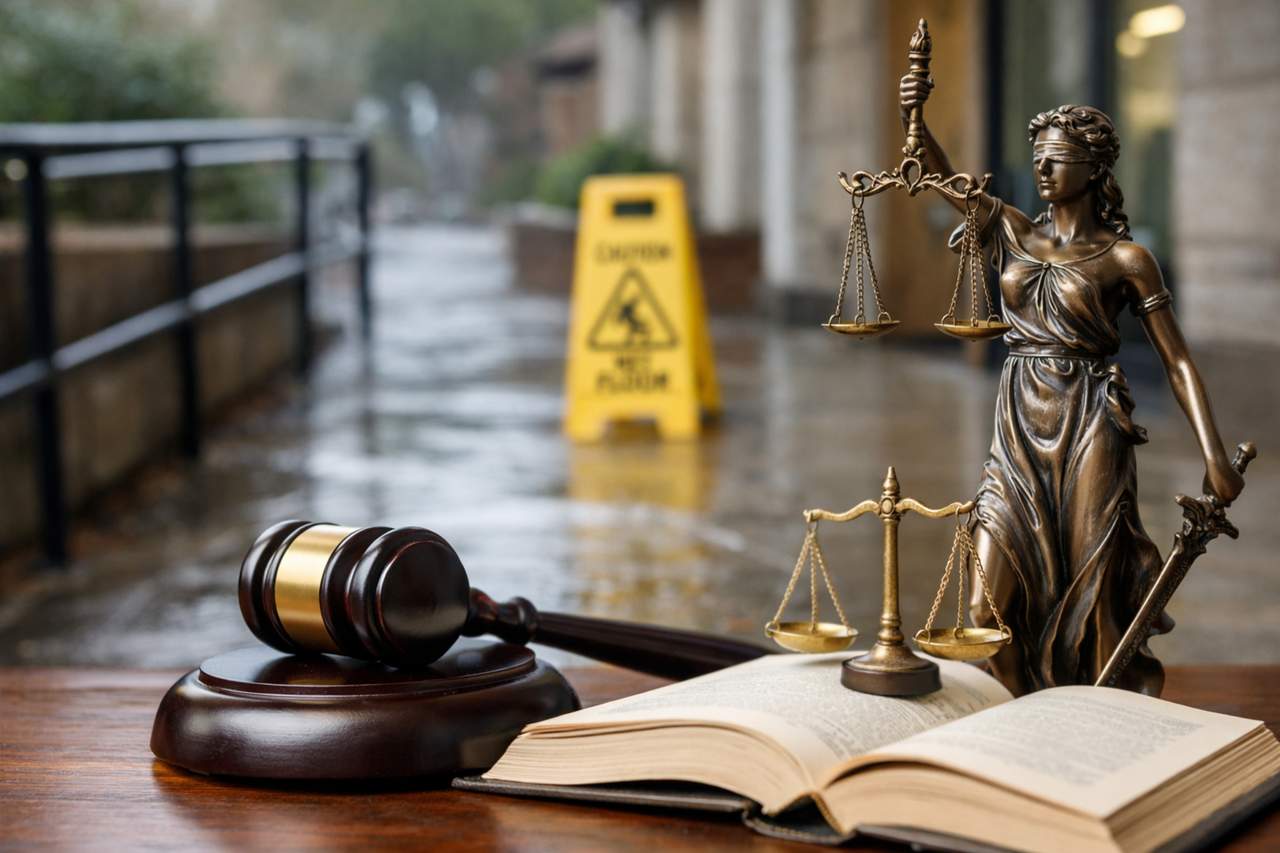

Premises liability lawyer searches often begin after a fall, a broken stair, a dark parking lot, loose flooring, falling merchandise, poor security, or another unsafe property condition changes an ordinary day in Vancouver, WA. If you were hurt at a store, apartment complex, office building, parking lot, rental home, sidewalk, or another property in Washington State, it helps to understand what the law actually requires, what evidence matters, what deadlines can affect your rights, and what a local law office can do to help. This article is written for people in Vancouver, WA, Camas, Washougal, Battle Ground, Ridgefield, La Center, Salmon Creek, Hazel Dell, Orchards, Felida, Brush Prairie, and nearby communities who want plain-English information about unsafe property claims. It also explains how BFQ Law Washington, located at 900 Washington Street, Suite 117, Vancouver, WA 98660, may be able to help when a property injury claim overlaps with personal injury issues, civil litigation concerns, mediation, or even related family or estate matters.
Table of Contents
| Section | What This Section Covers |
|---|---|
| I. Why People Look for a Premises Liability Lawyer | Why these cases arise and why they are often harder than they first appear |
| II. What Premises Liability Means in Washington State | The basic legal idea behind unsafe property claims |
| III. Common Premises Liability Accidents in Vancouver, WA | The types of property hazards that often lead to injury claims |
| IV. Who May Be Responsible for an Unsafe Property Condition | Owners, landlords, tenants, managers, contractors, and public entities |
| V. Visitor Status, Duty of Care, and Why It Matters | Invitees, licensees, trespassers, and how duty can change |
| VI. Notice, Foreseeability, and Proving Fault | What you usually must show to prove negligence in a property case |
| VII. What To Do Right After a Property Injury | Immediate practical steps that can protect both health and evidence |
| VIII. Evidence That Can Strengthen or Weaken a Claim | Photos, witnesses, reports, records, maintenance history, and more |
| IX. Damages in a Washington Premises Liability Claim | What compensation may cover in injury and wrongful death cases |
| X. Washington Rules and Deadlines You Should Know | Comparative fault, filing deadlines, government claims, recreation, and work injuries |
| XI. Settlement, Mediation, and Lawsuits in Clark County | How these claims often move forward in real life |
| XII. When a Premises Injury Case Overlaps With Family or Estate Issues | How one injury can affect parenting, finances, probate, and future planning |
| XIII. Why Contact BFQ Law Washington | What a consultation can help you clarify |
| XIV. Frequently Asked Questions | Quick answers to common questions about premises liability in Washington |
I. Why People Look for a Premises Liability Lawyer
Most people do not search for a premises liability lawyer because they have spent months thinking about property law. They search because something went wrong quickly. A shopper slips on a wet floor in Vancouver, WA. A tenant falls down poorly lit stairs in an apartment building near downtown. A customer is struck by merchandise that was stacked unsafely on a retail shelf. A visitor trips over broken pavement in a parking lot. A guest is hurt because a handrail gives way. A person is assaulted in an area where there may have been prior warning signs about security problems. Suddenly, the issue is not theoretical. It is medical, financial, and personal.
Unsafe property cases often look simple from the outside. Many injured people think, “I fell because the property was dangerous, so the owner should obviously pay.” Sometimes the facts do point strongly in that direction. But many claims become more complicated once insurance carriers, property managers, landlords, business operators, maintenance contractors, and public entities start sorting out who knew what, who controlled the area, and whether the danger existed long enough that it should have been corrected.
That is one reason a premises liability lawyer can matter. In many cases, the dispute is not only about whether you were hurt. It is about whether the dangerous condition can be proven, whether the right defendant has been identified, whether surveillance footage still exists, whether there were earlier complaints, whether building or maintenance records can be obtained, and whether the defense will argue that you were partly at fault.
For people in Vancouver, WA and nearby communities, another practical issue is timing. Evidence disappears fast. Stores record over surveillance footage. Apartment complexes repair broken stairs or railings. Weather changes outdoor conditions. Witnesses forget what they saw. Incident reports get filed, but not always in a way that helps the injured person. That makes early action important even when you are still deciding whether to settle, mediate, or file suit.
A premises liability lawyer also helps separate a genuine legal claim from an unfortunate accident that may not lead to recovery. Not every injury on another person’s property creates legal liability. Washington law generally focuses on reasonable care, notice, foreseeability, and causation. So the real question is often not simply whether you were injured on someone else’s property. The question is whether a person or entity responsible for that property failed to act reasonably under the circumstances.
In Vancouver and across Washington State, that analysis can apply to homes, rental properties, businesses, offices, restaurants, bars, hotels, sidewalks, parking garages, stores, warehouses, schools, event venues, and some public properties. If you are trying to understand whether your injury may fit into a larger Washington personal injury claim, or whether it may grow into a disputed civil case that needs civil litigation support, it helps to start with the basics of premises liability itself.
II. What Premises Liability Means in Washington State
Premises liability is the part of injury law that deals with harm caused by dangerous property conditions or unsafe activities connected to land or buildings. In plain English, it addresses whether the owner, occupier, landlord, business operator, or another party responsible for a property failed to use reasonable care to protect people who entered that property.
Washington courts treat premises liability as a negligence-based area of law. That means the injured person generally has to prove duty, breach, causation, and damages. Washington court decisions discussing unsafe property claims repeatedly frame the issue this way, and they also explain that a landowner’s duty can depend on whether the injured person was an invitee, licensee, or trespasser. If you want to read the legal language directly, Washington court opinions discussing these principles include official decisions such as a Washington Supreme Court opinion explaining that premises liability depends on whether the injured person was an invitee, licensee, or trespasser and another official Washington opinion that quotes the Restatement rule for landowner liability to invitees.
In practical terms, a premises liability claim usually asks questions like these: Was there an unreasonably dangerous condition on the property? Did the person or entity in control of the property know about it, or should they have known about it through reasonable inspection and maintenance? Did they fail to correct it or adequately warn about it? Did that failure cause the injury? And what losses flowed from the injury?
These cases can involve obvious physical hazards such as spills, broken steps, missing railings, loose tiles, potholes, cracked pavement, or falling objects. They can also involve less visible problems such as poor maintenance, inadequate lighting, code-related issues, or security concerns in the right factual setting. Local government pages in Southwest Washington reflect the reality that property safety is an active public concern. For example, the City of Vancouver’s Code Compliance program says it is responsible for maintaining safety, health, welfare, and livability through municipal codes, while Clark County’s Building Safety program explains that it reviews and inspects construction projects to help keep buildings safe for public use. Those pages do not decide private injury cases, but they do show how seriously local governments view property safety.
Premises liability also covers more than classic slip-and-fall claims. Washington case law discussing reasonable foreseeability makes clear that unsafe condition cases can involve falling merchandise too, not only floor hazards. The Washington Supreme Court’s official opinion in Galassi v. Lowe’s explains that the reasonable foreseeability exception can apply in falling merchandise cases as well as slip-and-fall incidents.
So when someone in Vancouver, WA says, “I need a premises liability lawyer,” what they usually mean is this: “I was hurt because a property was not reasonably safe, and I need to know whether Washington law gives me a path to recover my losses.”
III. Common Premises Liability Accidents in Vancouver, WA
Premises liability cases in Vancouver, WA and surrounding areas come in many forms. Some happen in busy commercial settings. Others happen in apartment complexes, rental houses, offices, parking areas, or public properties. The common thread is that the injury is tied to an unsafe condition on the land or within a structure.
Slip-and-fall and trip-and-fall incidents
These are the cases many people think of first. They may involve liquid on a grocery store floor, tracked-in rainwater at an entry, torn carpet, curled mats, loose floorboards, broken pavement, icy walkways, missing warning signs, poor drainage, or stairs that are not maintained safely. A fall can lead to far more than bruising. In many cases it causes wrist fractures, ankle injuries, knee damage, spinal issues, hip fractures, or traumatic brain injury.
Falling merchandise and falling objects
Retail and warehouse-style businesses sometimes create risks through shelf stocking methods, unstable displays, or overhead storage. Washington courts have specifically discussed this kind of case. As noted above, the official Galassi decision from the Washington Supreme Court confirms that unsafe-condition analysis is not limited to someone slipping on a floor.
Apartment and rental property injuries
These cases often involve stairs, railings, landings, lighting, walkways, broken locks, structural defects, leaks that create slipping hazards, or neglected common areas. In Vancouver, WA, where many residents live in apartments, duplexes, or rental homes, these claims can raise questions about what the landlord knew, what the tenant reported, whether a property manager was involved, and whether the dangerous condition existed inside a private unit, in a common area, or somewhere both parties had some control over.
Parking lot and sidewalk injuries
Parking lots and approaches to buildings can create serious risks through potholes, poor striping, broken curbs, poor lighting, uneven surfaces, or drainage problems. These cases often turn on photographs, timing, weather records, repair history, and whether the hazard was visible enough that reasonable maintenance should have caught it.
Inadequate security cases
Not every assault or criminal act on property creates a premises liability claim. But in some situations, especially where there were prior warning signs or known security concerns, a property owner’s failure to take reasonable precautions may become part of the legal analysis. These cases are fact-intensive and often require careful review of incident history, security measures, lease obligations, lighting, access control, and police or management records.
Work-related property injuries involving third parties
Some injured workers assume their only option is workers’ compensation. In Washington, that is not always true. If someone other than your employer or co-worker caused the injury, the Washington Department of Labor & Industries explains on its official third-party claim page that you may have legal options against that third party. This can matter in construction areas, delivery locations, leased properties, and shared commercial sites.
For readers in Vancouver, WA, Camas, Battle Ground, Washougal, and nearby Clark County communities, the key point is that premises liability is broader than one kind of fall. If the injury happened because a property was not reasonably safe, it may be worth discussing with a lawyer who handles injury cases and can also evaluate the dispute side of the matter if the claim becomes contested.
IV. Who May Be Responsible for an Unsafe Property Condition
One of the first legal questions in any premises liability case is simple to ask but not always easy to answer: who actually controlled the property condition that caused the injury? The answer is not always just “the owner.” In many Washington claims, more than one person or entity may have some role.
Property owners
The owner of the building, land, or business site may be responsible if they retained control over the area, knew or should have known about the danger, or failed to keep the property reasonably safe. In some cases the owner is obvious. In others, title records, leases, or corporate records may need to be checked.
Landlords and property management companies
Rental property injuries often involve not only an owner but also a management company. The management company may receive repair notices, supervise maintenance vendors, keep inspection logs, or control common areas. If the dangerous condition involved stairs, railings, walkways, lighting, locks, or another common-area issue, the management side of the case may be especially important.
Commercial tenants and business operators
A business that leases space may be the party actually responsible for day-to-day conditions inside the store, restaurant, salon, office, or other commercial unit. A fall in a grocery aisle, for example, may lead to questions about employee inspection practices, spill response procedures, shelf stocking, floor cleaning, and incident documentation.
Maintenance contractors, cleaning vendors, or repair companies
Sometimes the hazard exists because outside contractors created it, failed to fix it, or handled upkeep poorly. A cleaning company may leave a floor dangerously wet without proper warning. A maintenance company may fail to address a reported defect. A contractor may create a trip hazard during ongoing work. In those situations, responsibility may extend beyond the owner or tenant.
Public entities
If the injury happened on city, county, or state property, the case may involve a public entity. Claims against local governments can involve extra procedural steps, including claim-presentment rules discussed later in this article. Public property cases can also raise special questions about who controlled the specific location, what agency was responsible, and what public records may exist.
Shared responsibility
Many premises liability claims involve overlapping responsibility. A landlord may own the building. A property manager may oversee it. A tenant may operate the business. A vendor may maintain the floor. A security contractor may handle patrols. A repair company may have been called out earlier. Washington law allows fault to be compared among parties, which means a careful investigation can matter from the start.
This is one reason injured people in Vancouver, WA sometimes find that their matter starts as an injury claim and slowly becomes a document-heavy dispute involving contracts, leases, maintenance history, and disputed control. When that happens, the case may move closer to the kind of issue discussed in BFQ’s pages on civil litigation and mediation, not just straightforward insurance claim handling.
Identifying the right defendant early is not a small detail. It can affect insurance coverage, evidence requests, negotiation strategy, and filing deadlines. It can also make the difference between pursuing a case against the right party and spending months dealing with a denial built on a technical mistake.
V. Visitor Status, Duty of Care, and Why It Matters
Washington premises liability law still pays close attention to the injured person’s status on the property. Courts commonly describe three categories: invitees, licensees, and trespassers. That distinction matters because the legal duty can change depending on why the person was there and how the property was being used.
Invitees
An invitee is usually someone on the property for a reason connected to the owner’s or occupier’s interests, or because the property is held open to the public. Customers in a store, patrons in a restaurant, tenants using common areas, and many visitors to commercial spaces fit here. Washington decisions discussing premises liability repeatedly describe invitees as a core category in these cases, including official court materials stating that the landowner’s duty depends on whether the injured person was an invitee, licensee, or trespasser. For most retail, office, restaurant, and apartment common-area injuries in Vancouver, WA, invitee analysis is central.
For invitees, the law often focuses on whether the possessor of land knew or through reasonable care would have discovered the condition, realized it posed an unreasonable risk, expected that the visitor might not protect themselves against it, and failed to use reasonable care to protect against the danger. That is why inspection practices, cleaning logs, repair requests, staffing, warning signs, and recurring hazard history often matter so much.
Licensees
A licensee is often someone on the property by permission, but not primarily for the land possessor’s business benefit. Social guests are the classic example. These cases can arise in homes, informal gatherings, or private settings. The duty analysis may differ, so whether someone was there as a guest, tenant family member, contractor, delivery person, or shopper can affect the claim.
Trespassers
Trespasser cases are different still. Generally speaking, the duties are narrower, though the analysis can become more complicated where children are involved or where other doctrines may apply. Not every person the defense calls a trespasser will actually be treated that way under the facts, so labels should not be accepted too quickly.
Why status matters in real cases
Visitor status is not only a textbook issue. It can shape how the defense argues the case from day one. A store may say the condition was open and obvious. A landlord may argue the injured person was in an area they were not supposed to use. A homeowner may argue the person was a social guest who knew about the condition. A government defendant may argue the injured person was using the property for recreation under rules that limit liability in some situations.
Washington’s recreational-use statute is one example of how status and purpose matter. Under RCW 4.24.210, landowners who allow members of the public to use land for outdoor recreation without charging a fee are generally protected from liability for unintentional injuries, subject to important exceptions such as a known dangerous artificial latent condition without conspicuously posted warning signs. That can be highly relevant in park, trail, waterfront, and open-land cases around Washington.
If you are not sure what category you fell into, that is normal. Many injured people in Vancouver, WA simply know they were allowed to be there and were hurt by something unsafe. A lawyer’s job is to match those facts to the right legal framework, not to expect you to do that alone.
VI. Notice, Foreseeability, and Proving Fault
In many premises liability cases, the hardest issue is not whether the hazard existed after the injury. The hardest issue is proving what the responsible party knew, or should have known, before the injury happened. This is where notice and foreseeability come into play.
Actual notice
Actual notice means the defendant really knew about the danger. Maybe a tenant reported the broken stair several times. Maybe employees saw the spill and did not clean it. Maybe a manager received written complaints about the lighting. Maybe a prior incident report warned of the same problem. If that kind of evidence exists, it can be powerful.
Constructive notice
Constructive notice means the danger existed long enough, or was obvious enough, that the responsible party should have discovered it through reasonable care. A puddle that has been tracked across a floor for a significant period, crumbling concrete that developed over time, or a long-standing handrail defect may fit this kind of analysis.
Reasonable foreseeability
Washington courts have also discussed a reasonable foreseeability approach in certain unsafe-condition cases. The official Galassi opinion explains that the reasonable foreseeability exception can apply beyond classic slip-and-fall cases and that the exception is not automatic. It is not strict liability. The injured person still has to prove an unreasonably dangerous condition and the other elements of negligence.
This matters because defendants often respond to premises claims by saying they had no specific notice of the exact hazard. In some fact patterns, the broader nature of the business or operation may still make unsafe conditions reasonably foreseeable. That can be relevant in self-service retail layouts, unstable merchandise displays, and recurring conditions connected to how the business functions.
What usually helps prove fault
- Prior complaints, emails, texts, or maintenance requests
- Inspection logs, cleaning schedules, and safety policies
- Surveillance video showing how long a hazard existed
- Witnesses who saw the condition before the injury
- Repair records, contractor invoices, and work orders
- Photos showing age, wear, damage, or lack of warning
- Prior incident reports involving similar problems
What the defense often argues
Insurance carriers and defense counsel often argue that the hazard appeared moments before the incident, that the condition was open and obvious, that warnings were adequate, that the injured person was distracted, that the injured person knew the risk, or that someone else controlled the area. They may also argue that the claimed condition was not actually dangerous at all.
That is why a premises liability claim is often built on details, not just the fact of a fall. A case can become much stronger when evidence shows the condition was reported before, was part of a recurring problem, or was foreseeable because of how the property was operated. For residents of Vancouver, WA and nearby areas, the practical takeaway is simple: document early, request records early, and do not assume the property owner will preserve the evidence in a way that protects your side of the story.
VII. What To Do Right After a Property Injury
The first hours and days after a premises injury can shape both your health outcome and your legal case. Many people try to tough it out, go home, and deal with it later. That is understandable, but it can make a valid claim harder to prove.
Get medical care promptly
Your health comes first. If you hit your head, lost consciousness, cannot bear weight, have neck or back pain, or notice worsening symptoms, seek immediate care. Even when the injury does not feel catastrophic at first, early medical documentation can connect the symptoms to the incident before the defense argues that something else caused them.
Report the incident
Tell the store, landlord, property manager, business employee, or supervisor that you were hurt. Ask that an incident report be created. If it is a rental property, report it in writing if you can. If it is public property, identify the location as precisely as possible. Do not assume someone else will document it accurately.
Take photographs and video
Photograph the exact hazard, the surrounding area, the lighting, any warning signs, your shoes, your visible injuries, and anything relevant to scale or distance. In outdoor cases, capture weather, drainage, slope, and nearby conditions. In stair or flooring cases, close-up and wide-angle images are both useful.
Get witness information
If anyone saw the incident or the hazardous condition before the incident, get names and contact information. Independent witnesses can matter a great deal when the defense later disputes how the event occurred.
Preserve physical evidence
Keep the shoes and clothing you wore. Do not wash or alter them if they may show residue, tearing, impact marks, or other useful evidence. If a broken item or small physical object contributed to the injury and can be preserved safely, do so.
Be careful with statements
Do not guess about what happened. Do not minimize your injuries just to be polite. Do not make broad statements like “I’m fine” if you are not fine. Also do not assume fault without thinking. It is common for injured people to apologize reflexively after a fall, even when the hazard was serious.
Do not rely on the incident report alone
Incident reports can help, but they are rarely the whole story. They may be brief, inaccurate, or written from the business perspective. Treat them as one piece of evidence, not the final record of what happened.
Consider sending a preservation request
In many cases, especially those involving stores, apartments, parking lots, offices, or commercial buildings, surveillance footage may be overwritten quickly. A prompt preservation letter can matter. So can requests related to inspection logs, cleaning records, lease responsibilities, prior complaints, and maintenance tickets.
If you are in Vancouver, WA or nearby Clark County and the situation feels unclear, a consultation with BFQ Law Washington may help you figure out what evidence should be protected before it disappears. That can be especially important when the injury seems likely to cause extended treatment, missed work, or a disputed insurance claim.
VIII. Evidence That Can Strengthen or Weaken a Claim
Premises liability cases are often won or lost on documentation. Two people can agree that an injury happened and still strongly disagree on whether the property owner was legally responsible. Evidence helps answer that question.
Evidence that often helps
Photographs are often the starting point. They can show a spill, a broken step, loose flooring, poor lighting, missing handrails, or damaged pavement exactly as it appeared close to the time of the incident. Video can be even more useful because it may capture how long the condition existed, whether employees walked by it, or how the incident occurred.
Witnesses matter too. A witness may confirm there was no warning sign, that the area had been dangerous before, or that employees had already noticed the condition. A tenant may confirm repeated complaints to management. Another customer may confirm that the lighting was poor or that merchandise appeared unstable.
Business and property records can also be crucial. Depending on the case, these may include:
- Incident reports
- Cleaning and inspection logs
- Work orders and repair requests
- Maintenance contracts
- Prior complaint records
- Lease provisions allocating control and repairs
- Security policies and incident histories
- Training materials for employees
Government and local records can sometimes add context too. For example, local pages such as the City of Vancouver Code Compliance page and Clark County code enforcement resources reflect the existence of formal systems for property-condition concerns. Those resources do not automatically prove negligence in a private case, but they may point toward complaint processes, inspection activity, or the broader safety framework around a property issue.
Evidence problems that can hurt a claim
Delay is one of the biggest problems. If you wait too long, the dangerous condition may be repaired and documented only from the defense perspective. Witnesses move away or forget details. Video is erased. Memory fills in gaps inaccurately.
Another common problem is inconsistency. If your medical history says one thing, your incident report suggests another, and your later statement changes key details again, the defense will use that. Precision matters. That does not mean you need perfect recall moments after an injury. It means you should avoid guessing and keep your account honest and consistent.
Social media can also become evidence. Photos, check-ins, and casual comments made while still in treatment can be pulled out of context. The same goes for text messages that downplay injuries before symptoms fully develop.
Finally, it is important to understand that code issues, standing alone, are not always enough. A technical code issue may help explain why a condition was unsafe, but the case still comes back to negligence, notice, causation, and damages. Strong premises liability cases are usually built from multiple layers of proof, not a single document.
IX. Damages in a Washington Premises Liability Claim
When people ask whether they have a premises liability claim, they often mean two different things at once. First, they want to know whether someone else was legally at fault. Second, they want to know what compensation might be available if fault can be proven. The answer depends on the facts, but damages in Washington personal injury cases often include both financial losses and human losses.
Medical expenses
This can include emergency treatment, imaging, surgery, physical therapy, medications, specialist care, follow-up visits, mobility devices, and future care if the injury is ongoing. A serious fall can trigger months of treatment, especially with head injuries, back injuries, or fractures.
Lost income and reduced earning ability
If the injury kept you from working, changed your hours, limited your duties, or affected your long-term earning capacity, those losses may matter. This is especially important for self-employed workers, hourly workers, or people in physically demanding jobs.
Pain, suffering, and life impact
Not all losses show up on a bill. Pain, sleep disruption, loss of mobility, emotional distress, inability to care for children normally, loss of independence, and the effect on daily life may all matter in an injury case. Washington law recognizes noneconomic loss in many personal injury contexts.
Property loss and out-of-pocket costs
These can include broken phones, eyeglasses, clothing, travel to treatment, or household help made necessary by the injury.
Wrongful death and survival claims
Some premises injuries are fatal. When that happens, Washington law has separate rules that may affect who can bring a claim and what damages may be pursued. Washington’s wrongful death statute, beneficiary statute, and survival statute can all become important. When a fatal injury intersects with probate or estate administration, families may also need guidance related to probate and estate planning issues.
One important point for injured people in Vancouver, WA is that damages are only part of the case. The amount of harm matters, but so does liability. A severe injury with weak proof of fault can be difficult. A modest injury with strong proof of negligence may settle more smoothly. Both sides of the case need to be evaluated honestly.
It is also worth remembering that insurance carriers often focus on minimizing the life impact of an injury. They may argue that treatment ended too soon, that the condition was preexisting, or that the limitations are exaggerated. Detailed medical records, consistent treatment, witness observations, and day-to-day documentation can make a real difference.
X. Washington Rules and Deadlines You Should Know
Premises liability cases in Washington do not exist in a vacuum. Several important rules can shape the value, timing, and strategy of the claim.
Comparative fault
Washington follows a comparative fault system. Under RCW 4.22.005, a claimant’s contributory fault reduces damages proportionally, but it does not automatically bar recovery. In practical terms, that means the defense may argue you were distracted, ignored a warning, wore unsafe footwear, used the wrong route, or stepped where you should not have stepped. Even if the defense persuades a fact finder that you were partly at fault, that does not necessarily end the case. It may reduce recovery instead.
Three-year filing deadline
Washington’s general three-year limitation period for many personal injury claims appears in RCW 4.16.080. People often hear “three years” and assume they have plenty of time. In real life, that is risky. Waiting can damage the case long before the legal deadline arrives because evidence fades, records disappear, and the defense gains time to shape the story first.
Claims against local government
If the claim involves a city, county, or other local governmental entity, Washington has claim-presentment requirements. Under RCW 4.96.020, a local government must designate an agent to receive claims, and no action subject to that statute may be filed until sixty calendar days have elapsed after the claim is first presented. That waiting period can catch people off guard. If your injury may involve public property in Vancouver, Clark County, or another public entity in Washington State, do not assume the usual private-property process applies.
Recreational-use immunity
Washington also limits liability in some recreational land situations. As noted earlier, RCW 4.24.210 generally protects landowners who allow the public to use land for outdoor recreation without charging a fee, subject to exceptions including a known dangerous artificial latent condition without conspicuously posted warning signs. This issue can matter in trail, park, river, waterfront, and other outdoor injury cases.
Workplace injuries involving third parties
If you were injured while working on someone else’s property, workers’ compensation may not be the whole story. The Washington Department of Labor & Industries explains on its official third-party injury page that workers may pursue legal action against someone other than the employer or co-worker when a third party caused the injury. That can be highly relevant in delivery, maintenance, subcontractor, and multi-party commercial property settings.
Local court structure
In Clark County, court choice can also matter. According to the official Clark County courts page, Superior Court is the court of general jurisdiction and hears civil suits involving amounts in excess of $75,000, while the official Clark County District Court civil page states that District Court can hear civil cases where the amount in controversy does not exceed $100,000. Procedure, strategy, and leverage can look different depending on where the case belongs.
These rules are a big reason injured people often benefit from early legal advice. A premises liability claim is not just about proving a hazard existed. It is also about fitting the case into Washington’s deadlines, procedural rules, and special statutory requirements before those rules start working against you.
XI. Settlement, Mediation, and Lawsuits in Clark County
Many people want to know whether a premises liability claim will settle or end up in court. The honest answer is that either outcome is possible, and the path often depends on liability strength, injury severity, insurance coverage, documentation, and the defendant’s willingness to accept responsibility.
Insurance claims usually come first
For many private-property cases, the first stage is an insurance claim. The property owner, tenant, management company, or business may have liability insurance that investigates the incident. The carrier may ask for a statement, medical authorization, or recorded interview. It may request bills and records while saying liability is still under review.
That stage can look calm on the surface, but important things are happening. The insurance company is evaluating notice, causation, injury value, prior medical history, and comparative fault. It is also deciding whether to contest the claim aggressively or explore resolution.
Settlement can happen early or late
Some cases resolve before suit when fault is clear, injuries are documented, and both sides want to avoid litigation cost. Others do not move until after records are exchanged, depositions are taken, or deadlines force more serious negotiation.
Mediation can be especially useful
Many Washington civil disputes benefit from mediation. On BFQ’s Washington mediation page, the firm explains mediation as a confidential process aimed at reaching a mutually agreeable resolution. In premises liability disputes, mediation can be useful when both sides see risk but disagree sharply about value, notice, or comparative fault. It allows parties to test settlement possibilities without trial.
Lawsuits involve formal discovery
If settlement does not happen, a lawsuit may open the door to tools that are not available during a standard insurance claim. Washington’s official Superior Court Civil Rules include provisions for discovery, document requests, interrogatories, depositions, and inspections. That can be important in premises cases because critical information is often in the defendant’s hands, such as surveillance footage, maintenance logs, staffing policies, contractor agreements, and prior complaint history.
Summary judgment issues can arise
Defendants in unsafe property cases often file motions arguing there is no genuine issue of material fact. Washington’s court rules include Rule 56 on summary judgment. In real terms, that means a judge may be asked to dismiss the case before trial if the defense says the evidence is legally insufficient. Good investigation and good record-building matter because of that risk.
Local knowledge matters
For injured people in Vancouver, WA, local context helps. Clark County procedure, local scheduling, the likely forum, and the way claims are prepared all matter. That is one reason many clients prefer a firm that is already active in related Washington matters, whether the issue stays in the insurance phase or turns into a civil dispute. BFQ’s pages on civil litigation in Vancouver, WA and contacting the firm for a consultation may be useful starting points if your premises claim is already becoming more contested than expected.
XII. When a Premises Injury Case Overlaps With Family or Estate Issues
The prompt for a premises liability lawyer is usually a physical injury, but many real cases reach beyond medical treatment. A serious injury can disrupt parenting schedules, affect child support, change household income, delay a divorce resolution, complicate probate, or create an urgent need for estate planning documents. For many families in Vancouver, WA, legal problems do not arrive one at a time.
Family law overlap
A broken ankle, spinal injury, or head injury can make it harder to follow a residential schedule, commute to exchanges, work overtime, or care for children without help. If a parent is already in a divorce, custody, or support matter, the injury may become part of a larger financial and logistical problem. That is one reason some clients look for a law office that handles both injury matters and family-related issues in the same region. BFQ Law Washington also publishes local family law resources, including pages on divorce in Vancouver, WA and child support issues in Vancouver, WA.
Probate and wrongful death overlap
When a premises injury is fatal, the case can quickly intersect with probate and estate administration. Someone may need authority to act for the estate. Beneficiary questions may need to be resolved. Washington’s wrongful death and survival statutes can affect who may bring claims and what damages are sought. That is why a fatal property case may require both injury analysis and estate-related guidance.
Estate planning after a serious injury
Even in nonfatal cases, a serious injury can prompt people to update powers of attorney, healthcare documents, wills, and related planning. An accident often changes how families think about decision-making, guardianship issues, and long-term financial protection. BFQ’s estate planning page for Vancouver, WA and its Washington wills and trusts resource may be helpful if an injury has exposed gaps in your current planning.
Financial pressure changes legal decisions
Injured people sometimes feel pushed to settle too quickly because rent is due, work is missed, and family obligations continue. That pressure is real. It is one of the reasons coordination matters. A claim should not be viewed only as a medical-bill problem if it is also affecting parenting, household stability, future care planning, or estate administration.
For readers in Vancouver, WA and nearby Southwest Washington communities, this is an important practical point: the injury itself may be the beginning of the legal problem, not the end of it. If your property injury is colliding with a divorce, child-related issue, probate concern, or planning need, it may help to speak with a firm whose Washington practice areas extend beyond a single narrow category.
XIII. Why Contact BFQ Law Washington
If you are searching for a premises liability lawyer in Vancouver, WA, you may not need a dramatic sales pitch. You probably need clarity. You need to know whether the facts support a claim, what evidence should be preserved, who may be responsible, what deadlines matter, whether insurance is already positioning to deny fault, and whether your injury case may overlap with other legal issues affecting your family or finances.
That is where a consultation can help. BFQ Law Washington serves clients from 900 Washington Street, Suite 117, Vancouver, WA 98660. The firm’s Washington resources reflect practice areas that include personal injury, civil litigation, family law, probate, wills trusts and estate planning, settlement and dispute work, criminal representation, and mediation. For a premises liability matter, that breadth can matter when the case does not stay neatly inside one category.
A consultation can help you work through questions such as:
- Was there likely a viable premises liability claim under Washington law?
- Who actually controlled the area or condition that caused the injury?
- What records or video should be preserved right away?
- Does the case involve a private property owner, a landlord, a business, or a public entity?
- Are there workers’ compensation and third-party issues at the same time?
- Would mediation make sense if liability is disputed but both sides want to avoid a drawn-out case?
- Does the injury also affect a family law, probate, or estate planning matter?
If you want to take the next step, contact BFQ Law Washington through the firm’s Washington contact page or email secretary.WA@BFQLaw.com. You can also review the firm’s Washington practice areas, browse more Washington legal articles, or read related pages on personal injury matters and civil disputes in Vancouver, WA.
Direct call to action: If you were hurt because a store, landlord, business, parking area, rental property, or other location in Vancouver, WA or nearby Washington communities was not reasonably safe, contact BFQ Law Washington for a consultation. Early review can help preserve evidence, clarify deadlines, and give you a better sense of whether your case may be resolved through insurance negotiation, mediation, or litigation.
XIV. Frequently Asked Questions
Do I have a premises liability claim if I slipped and fell in Vancouver, WA?
Maybe, but not automatically. You usually need more than the fact that a fall happened on someone else’s property. A claim often depends on whether there was an unreasonably dangerous condition, whether the person or entity responsible knew or should have known about it, whether they failed to fix or warn about it, and whether that failure caused your injuries.
How long do I have to file a premises liability lawsuit in Washington?
Many personal injury claims in Washington are subject to a three-year limitations period under RCW 4.16.080. That said, waiting is risky even when the deadline seems far away because surveillance footage, witness memory, and repair evidence can disappear early. Claims involving government entities may also have extra presentment rules and waiting periods.
Can I still recover money if I was partly at fault?
Possibly yes. Washington follows comparative fault. Under RCW 4.22.005, your recovery can be reduced by your share of fault, but it is not automatically barred just because the defense says you were partly responsible.
What if I was hurt on city or county property?
Claims involving public entities can require special steps. Local government tort claims in Washington can involve the presentment requirements in RCW 4.96.020, including a sixty-day waiting period after the claim is presented before a lawsuit may be filed. Public-property cases should be reviewed promptly so deadlines and procedural rules are not missed.
What evidence is most useful in a premises liability case?
Helpful evidence often includes photographs, video, witness names, incident reports, medical records, repair requests, maintenance logs, prior complaints, and any proof showing how long the hazard existed or who controlled the area. The sooner that evidence is preserved, the better.
What if I was injured while working on someone else’s property?
You may have more than one issue to review. Workers’ compensation may apply, but if someone other than your employer or co-worker caused the injury, Washington L&I explains that a third-party claim may also be possible. These cases should be looked at carefully because they can involve both workers’ compensation and personal injury law.
Does every unsafe property case go to trial?
No. Many claims resolve through insurance negotiation or mediation. Others require a lawsuit and formal discovery before settlement becomes realistic. Some do go to trial, especially when liability or damages are sharply disputed. The path depends on the facts, the quality of the evidence, and the willingness of the defense to evaluate the claim fairly.